

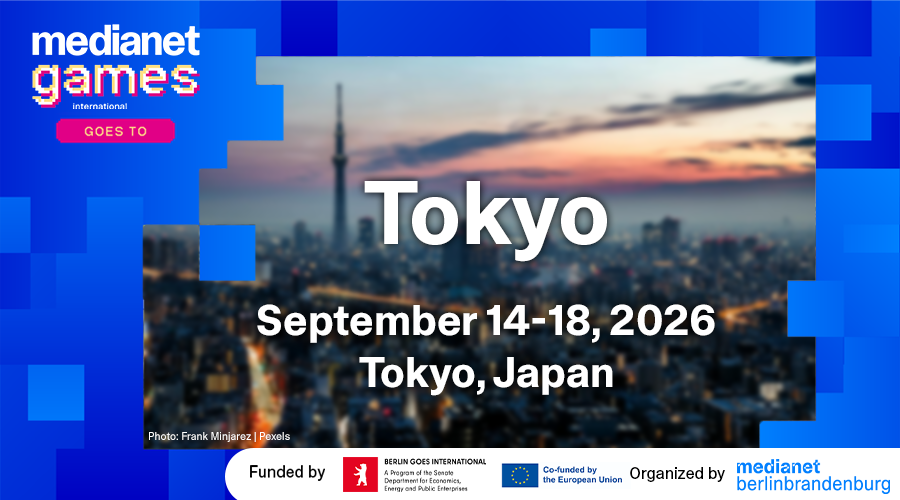

Datum
14.09.26 - 18.09.26
Ort
TokioJapan
Berlin meets Tokyo: Recap unserer Delegationsreise nach Japan
Fünf Tage, zahlreiche Begegnungen mit führenden Unternehmen der japanischen Games- und Creative-Tech-Branche und zwei intensive Tage auf der Tokyo Game Show: Vom 14. bis 18. September 2026 organisierte medianet für zehn Unternehmen aus Berlin eine Delegationsreise im Rahmen des Projekts medianet GAMES International nach Tokyo und Chiba. Im Mittelpunkt standen der direkte Austausch mit Unternehmen, Studios, Investor*innen und Innovationshubs sowie dem Aufbau nachhaltiger Verbindungen und Netzwerke zwischen den Creative-Tech-Ökosystemen Japans und Berlins.
Das Programm verband Unternehmensbesuche mit Einblicken in die japanische Startup- und Innovationslandschaft, gezielten Networking-Formaten und dem Besuch einer der weltweit wichtigsten Games-Messen. Damit bot die Reise nicht nur einen Blick auf aktuelle Entwicklungen im japanischen Markt, sondern vor allem zahlreiche Gelegenheiten, konkrete Kontakte für zukünftige Kooperationen zu knüpfen.
Tag 1: Vom japanischen Games-Markt bis zum Creative-Content-Ökosystem
Der erste Delegationstag startete in Shibuya mit einem Besuch bei Google. Dort standen gleich mehrere Perspektiven auf den japanischen Markt im Mittelpunkt: Neben einem Überblick über den japanischen Gaming-Markt und strategische Entwicklungen ging es um Creative Excellence, Advertising Creatives und wirksame Marketingstrategien für Japan.
Damit begann die Reise direkt mit einer zentralen Frage für international agierende Unternehmen: Was unterscheidet den japanischen Markt von europäischen Märkten – und was müssen Unternehmen berücksichtigen, wenn sie ihre Produkte, Inhalte und Marken dort erfolgreich positionieren möchten?
Anschließend führte das Programm zu Square Enix, die einen Einblick in ihr Studio gewährten. Der Besuch bot damit die Gelegenheit zum direkten Austausch mit einem der bekanntesten Akteure der japanischen Games-Industrie.
Am Nachmittag verlagerte sich der Fokus stärker auf die Förderung und Entwicklung neuer Unternehmen und Inhalte. Im Tokyo Contents Incubation Center (TCIC) erhielt die Delegation einen Überblick über die Arbeit des Inkubators. Zwei dort ansässige Unternehmen stellten ihre Arbeit vor, gefolgt von einer Q&A- und Networking-Session, einer Führung durch die Räumlichkeiten sowie einer Vorstellung des Berliner Ökosystems durch medianet. Der Austausch mit einem Inkubator wie dem TCIC machte deutlich, wie stark die Entwicklung neuer Inhalte und Unternehmen von funktionierenden Unterstützungsstrukturen, Netzwerken und internationalen Kontakten profitiert.
Den Abschluss des ersten Tages bildete ein gemeinsames Dinner mit einer Delegation des Bundesministeriums für Wirtschaft und Energie (BMWE). Mit 21 Teilnehmer*innen auf Seiten der BMWE-Delegation bot der Abend zusätzlichen Raum für Austausch und Vernetzung über die eigene Reisegruppe hinaus.
Tag 2: IP, Innovation und neue Kontakte in Shibuya
Der Dienstag begann bei der Good Smile Company. Auf dem Programm standen ein Treffen mit dem Präsidenten des Unternehmens und eine Studio Tour. Der Termin eröffnete eine weitere Perspektive auf die japanische Kreativwirtschaft und auf Geschäftsmodelle, die weit über die Entwicklung einzelner Games hinausgehen. Gerade die Verbindung von starken IPs, Communities und unterschiedlichen Formen der Content-Verwertung spielt im japanischen Entertainment-Markt eine zentrale Rolle.
Nach dem Unternehmensbesuch ging es weiter zur Tokyo Innovation Base (TIB). Bei einem Rundgang durch den Innovationsstandort konnte sich die Delegation ein Bild davon machen, wie Tokyo Startups, etablierte Unternehmen und internationale Akteur*innen an einem zentralen Ort zusammenbringt.
Am Nachmittag stand schließlich das Networking im Mittelpunkt. Bei einem eigens für die Delegation organisierten Netzwerkevents im 404 Not Found, ein Creative Space geführt von der Skeleton Crew, die Organisatoren des Bit Summit, präsentierten sich die Delegierten zunächst in kurzen Micro-Pitches, bevor das Programm in mehrere Networking-Phasen mit japanischen Unternehmen wie Sony und SEGA überging. Ein kurzer Japan-Germany Cultural Break ergänzte das Format. Dies bot die Möglichkeit, gezielt neue Kontakte aufzubauen und mögliche Anknüpfungspunkte zwischen Unternehmen aus beiden Märkten unmittelbar zu identifizieren.
Tag 3: Games Development, Investment und internationale Startups
Der Mittwoch rückte die Games-Branche noch stärker in den Mittelpunkt. Den Auftakt machte ein Besuch bei Shueisha Games, ein japanischer Spieleentwickler und –publisher, bei dem die Delegation ihre Projekte pitchen durfte.
Am Nachmittag folgte mit Bandai Namco ein weiterer großer Name der japanischen Entertainment-Industrie. Neben einer Studio Tour stand ein Gespräch mit einem CVC-Investor beim Bandai Namco 021 Fund auf dem Programm, der sich insbesondere auf internationale Investments in Games, Entertainment und digitale Plattformen konzentriert.
Der Termin brachte damit nicht nur die Unternehmens- und Produktionsperspektive ein, sondern auch die Frage, welche Technologien, Geschäftsmodelle und Unternehmen für strategische Investor*innen im internationalen Games- und Entertainment-Markt interessant werden.
Diese Investment- und Startup-Perspektive setzte sich anschließend beim Shibuya Startup Support fort. Unter dem Titel “Snack & Connect – Special Edition: Shibuya Meets Global Gaming Startups” trafen unterschiedliche internationale Ökosysteme aufeinander. Nach Vorstellungen der beteiligtenDelegationen, folgten kurze Startup-Pitches und ein ausführliches Networking, um Unternehmen und Menschen direkt miteinander ins Gespräch zu bringen und aus ersten Begegnungen langfristige Beziehungen entstehen zu lassen.
Tag 4 und 5: Zwei Tage Tokyo Game Show
Nach drei Tagen mit Unternehmensbesuchen und kuratierten Networking-Terminen bildete die Tokyo Game Show den Abschluss der Delegationsreise. Sowohl am Donnerstag als auch am Freitag war jeweils ein kompletter Messetag in der Makuhari Messe vorgesehen.
Die Tokyo Game Show bot der Delegation die Möglichkeit, die zuvor gewonnenen Einblicke in einem deutlich größeren Branchenkontext einzuordnen: internationale Publisher und Studios, neue Games und Technologien, Markttrends sowie zahlreiche weitere Möglichkeiten für Business Meetings und Networking kamen hier an einem Ort zusammen.
Auch nach Messeschluss ging der Austausch weiter. Am Donnerstagabend stand zusätzlich das Sushi & Sake Networking Event von Shochiku Games auf dem Programm – ein weiterer Anlass, Kontakte aus der internationalen Games-Branche in informeller Atmosphäre zu vertiefen.
Fünf Tage zwischen Marktverständnis, Innovation und neuen Partnerschaften
Die Delegationsreise zeigte die japanische Games- und Creative-Tech-Branche aus sehr unterschiedlichen Perspektiven: vom globalen Tech-Unternehmen über große Games- und Entertainment-Studios bis hin zu Inkubatoren, Startup-Hubs, Investor*innen und jungen Unternehmen.
Dabei wurde auch deutlich, wie viele gemeinsame Themen die Ökosysteme in Japan und Berlin verbinden: die Internationalisierung von Unternehmen, die Entwicklung und Vermarktung neuer IPs, Zugang zu Kapital, Innovationsförderung, die Unterstützung von Startups sowie die Frage, wie technologische Entwicklungen neue Produktions- und Geschäftsmodelle ermöglichen.
Vor allem aber lebte die Reise vom persönlichen Austausch. Unternehmensbesuche, Micro-Pitches, Startup-Sessions, gemeinsame Dinner und Networking-Events schufen zahlreiche Gelegenheiten, neue Verbindungen zwischen Berlin und Japan aufzubauen.
Nach fünf intensiven Tagen bleibt damit nicht nur ein umfassender Eindruck eines der weltweit bedeutendsten Games- und Entertainment-Märkte – sondern vor allem eine Vielzahl neuer Kontakte und Anknüpfungspunkte, auf denen der internationale Austausch in Zukunft weiter aufbauen kann.
Teilnehmende Unternehmen
ENGLISCH
Berlin Meets Tokyo: Recap of Our Delegation Trip to Japan
Five days, numerous meetings with leading companies in Japan’s games and creative tech industries, and two intensive days at the Tokyo Game Show: From September 14 to 18, 2026, medianet organized a delegation trip to Tokyo and Chiba for ten companies from Berlin as part of the medianet GAMES International project. The focus was on direct exchanges with companies, studios, investors, and innovation hubs, as well as on building sustainable connections and networks between the creative tech ecosystems of Japan and Berlin.
The program combined company visits with insights into Japan’s startup and innovation landscape, targeted networking events, and a visit to one of the world’s most important gaming trade shows. As a result, the trip not only offered a glimpse into current developments in the Japanese market but, above all, provided numerous opportunities to establish concrete contacts for future collaborations.
Day 1: From the Japanese Gaming Market to the Creative Content Ecosystem
The first day of the delegation began in Shibuya with a visit to Google. The focus there was on several perspectives on the Japanese market: In addition to an overview of the Japanese gaming market and strategic developments, the discussion centered on creative excellence, advertising creatives, and effective marketing strategies for Japan.
The trip thus began directly with a key question for companies operating internationally: What distinguishes the Japanese market from European markets—and what must companies consider if they want to successfully position their products, content, and brands there?
The program continued with a visit to Square Enix, which provided a behind-the-scenes look at its studio. The visit offered an opportunity for direct dialogue with one of the best-known players in the Japanese gaming industry.
In the afternoon, the focus shifted more toward the promotion and development of new companies and content. At the Tokyo Contents Incubation Center (TCIC), the delegation received an overview of the incubator’s work. Two companies based there presented their work, followed by a Q&A and networking session, a tour of the facilities, and a presentation on the Berlin ecosystem by medianet. The exchange with an incubator like the TCIC highlighted just how much the development of new content and companies benefits from effective support structures, networks, and international contacts.
The first day concluded with a joint dinner with a delegation from the Federal Ministry for Economic Affairs and Energy (BMWE). With 21 participants from the BMWE delegation, the evening provided additional opportunities for discussion and networking beyond the travel group.
Day 2: IP, Innovation, and New Contacts in Shibuya
Tuesday began at Good Smile Company. The program included a meeting with the company’s president and a studio tour. The visit provided further insight into Japan’s creative industries and business models that extend far beyond the development of individual games. In particular, the combination of strong IPs, communities, and various forms of content monetization plays a central role in the Japanese entertainment market.
After the company visit, the group continued to the Tokyo Innovation Base (TIB). During a tour of the innovation hub, the delegation gained insight into how Tokyo brings together startups, established companies, and international players in one central location.
In the afternoon, the focus was finally on networking. At a networking event organized specifically for the delegation at 404 Not Found—a creative space run by the Skeleton Crew, the organizers of the Bit Summit—the delegates first introduced themselves in short micro-pitches before the program transitioned into several networking sessions with Japanese companies such as Sony and SEGA. A brief Japan-Germany Cultural Break rounded out the format. This provided an opportunity to build new contacts in a targeted manner and immediately identify potential points of connection between companies from both markets.
Day 3: Game Development, Investment, and International Startups
Wednesday placed an even greater focus on the gaming industry. The day kicked off with a visit to Shueisha Games, a Japanese game developer and publisher, where the delegation had the opportunity to pitch their projects.
In the afternoon, the delegation visited Bandai Namco, another major player in the Japanese entertainment industry. In addition to a studio tour, the program included a discussion with a CVC investor from the Bandai Namco 021 Fund, which focuses specifically on international investments in games, entertainment, and digital platforms.
The meeting thus not only provided insight into the corporate and production perspectives but also addressed the question of which technologies, business models, and companies are of interest to strategic investors in the international gaming and entertainment market.
This focus on investment and startups continued at Shibuya Startup Support. Under the title “Snack & Connect – Special Edition: Shibuya Meets Global Gaming Startups,” various international ecosystems came together. Presentations by the participating delegations were followed by short startup pitches and extensive networking, designed to bring companies and individuals into direct conversation with one another and to foster long-term relationships from these initial encounters.
Days 4 and 5: Two Days at the Tokyo Game Show
After three days of company visits and curated networking events, the Tokyo Game Show marked the conclusion of the delegation’s trip. A full day at the Makuhari Messe was scheduled for both Thursday and Friday.
The Tokyo Game Show offered the delegation the opportunity to place the insights they had gained earlier within a much broader industry context: international publishers and studios, new games and technologies, market trends, and numerous other opportunities for business meetings and networking all came together in one place.
The exchange continued even after the show closed. On Thursday evening, the program also included Shochiku Games’ Sushi & Sake Networking Event—another opportunity to strengthen connections with the international games industry in an informal setting.
Five days of market insights, innovation, and new partnerships
The delegation trip showcased Japan’s gaming and creative tech industries from a wide range of perspectives: from global tech companies and major gaming and entertainment studios to incubators, startup hubs, investors, and young companies.
It also became clear just how many common themes connect the ecosystems in Japan and Berlin: the internationalization of companies, the development and marketing of new IPs, access to capital, the promotion of innovation, support for startups, and the question of how technological developments enable new production and business models.
Above all, however, the trip thrived on personal interaction. Company visits, micro-pitches, startup sessions, group dinners, and networking events created numerous opportunities to forge new connections between Berlin and Japan.
After five intensive days, the trip left participants not only with a comprehensive impression of one of the world’s most significant games and entertainment markets—but above all with a wealth of new contacts and points of connection upon which international exchange can continue to build in the future.
Participating Companies
Deine Ansprechperson
Florian Masuth
